





INTERIORS
Wardrobes and Storage That Fit How Your Family Actually Lives
Plan wardrobes, shoe units and kids' storage around what you own and how you use it, not around a catalogue.
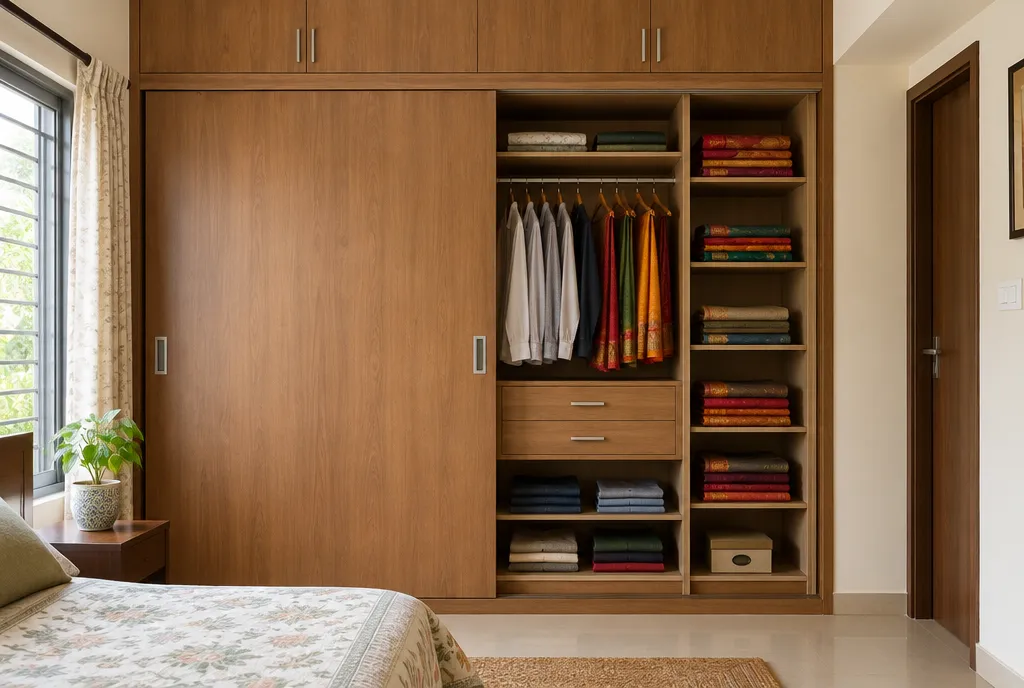
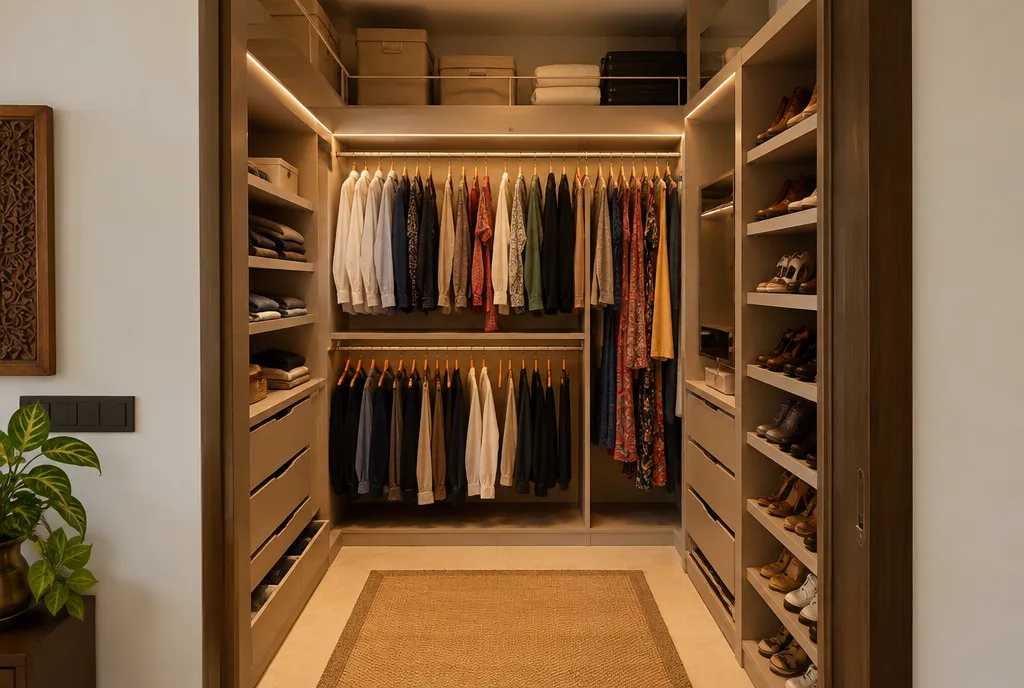
The best wardrobe is the one built around what your family actually owns. Count your clothes, sarees, shoes, bedding and suitcases first, then decide how much hanging, folding and drawer space each person needs. A standard layout copied from a catalogue often leaves some areas empty and others overflowing.
Start with an honest inventory
Before any drawing, sort what you own into categories and measure the longest items.
- Long hanging items such as sarees, coats, kurtas and sherwanis need full-height rails.
- Shirts, trousers and short kurtas can share a double rail, one above the other.
- Folded clothes, T-shirts and innerwear suit shelves and drawers.
- Bulky bedding, suitcases and festival items belong in the loft.
Match the layout to the person
Each family member uses storage differently, so give each their own zone instead of a shared pile.
- Adults: a mix of rails, drawers for small items and a locker for valuables.
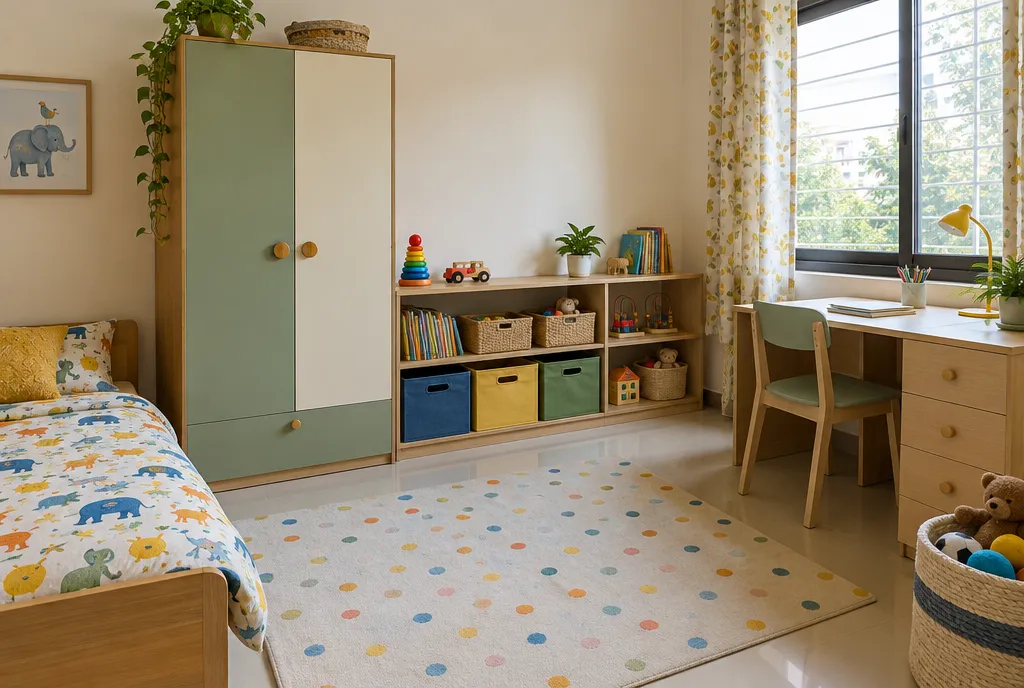
- Children: low rails and open shelves they can reach, which can be changed as they grow.
- Elders: avoid very high or very low shelves; place frequently used items between knee and shoulder height.
Get the dimensions right
A hanging section is commonly about 55 to 60 cm deep so clothes on hangers clear the doors. Heavy drawers need good channels and enough width to pull out fully. In Jaipur, where dust and heat are common, closed shutters protect clothes better than open shelves.
Plan for the way you use it every day
Put the things you reach for daily at eye and elbow level, and keep rarely used items high or low. Add a small drawer with a divider for watches, jewellery and keys, and a pull-out tray for ties or belts. If two people share a wardrobe, give each a clear half, so one person's habits do not take over the other's space.
Lighting inside the wardrobe is a small addition that makes a big difference. A thin LED strip that switches on when the door opens helps you see clearly on dark mornings.
Sliding or hinged doors?
- Hinged doors give full access but need clear floor space to swing open.
- Sliding doors save space in narrow rooms but you only see part of the wardrobe at a time.
- Mirror panels make a small bedroom feel larger, and save a separate mirror.
Do not stop at the bedroom
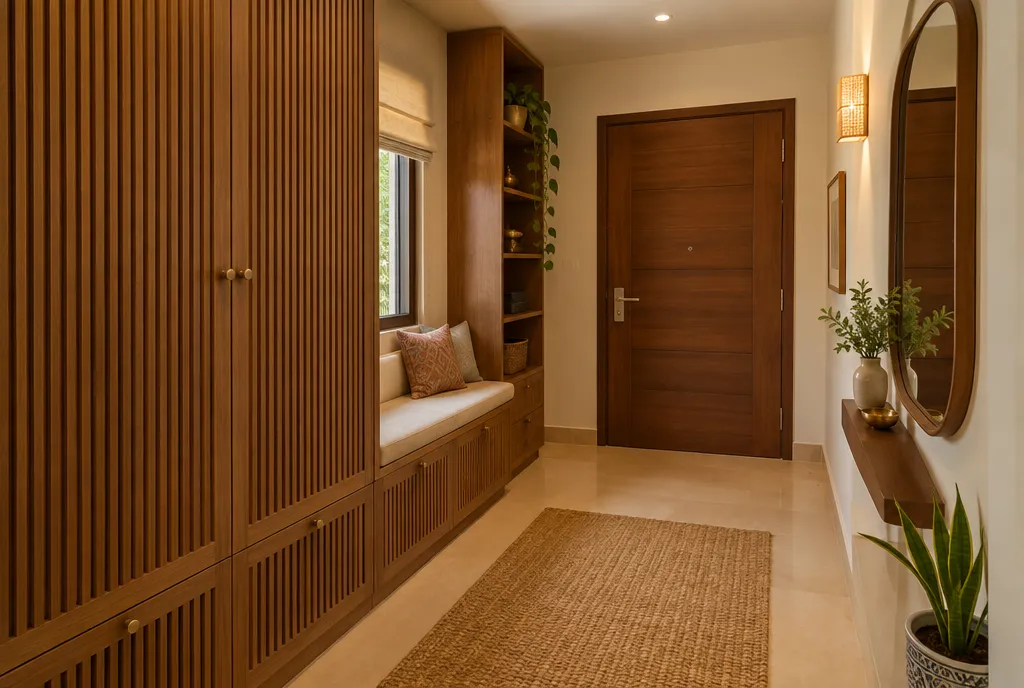
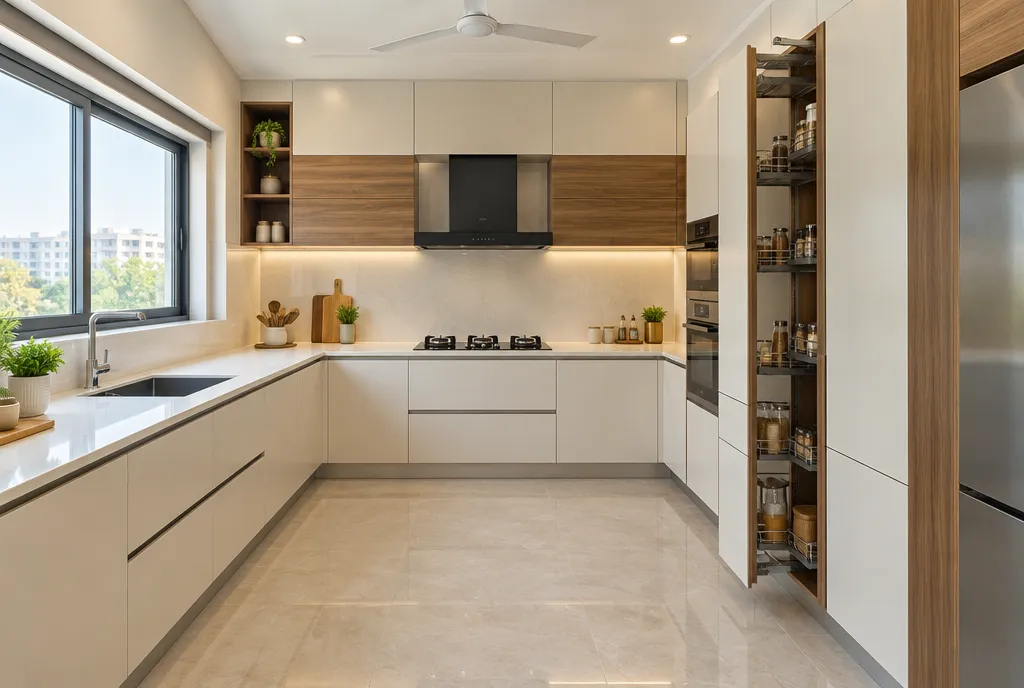
Shoes, bags, school gear and daily clutter collect near the entrance. A slatted shoe cabinet with a seat, and a closed cupboard for bags, keeps the hall tidy. Use the space under beds and above doors for seasonal storage. Our FAQs answer common questions about working with us.
How Reidius Infra can help
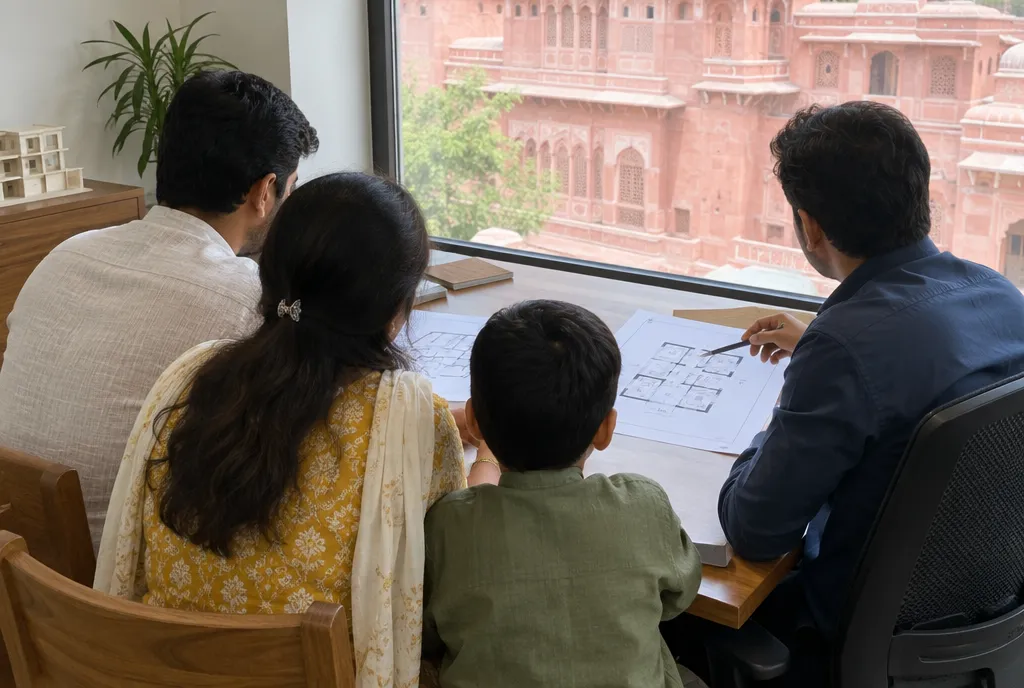
Reidius Infra builds wardrobes and storage as part of the full interior, so the units line up with your walls, lights and flooring. We start by learning what your family owns and how you live. Request a free consultation and we will suggest a plan that suits your home.