





CONSTRUCTION
Curing concrete properly: the cheapest way to a stronger building
Keeping fresh concrete wet and protected costs very little, yet it decides how strong and crack-free your slabs and columns become.
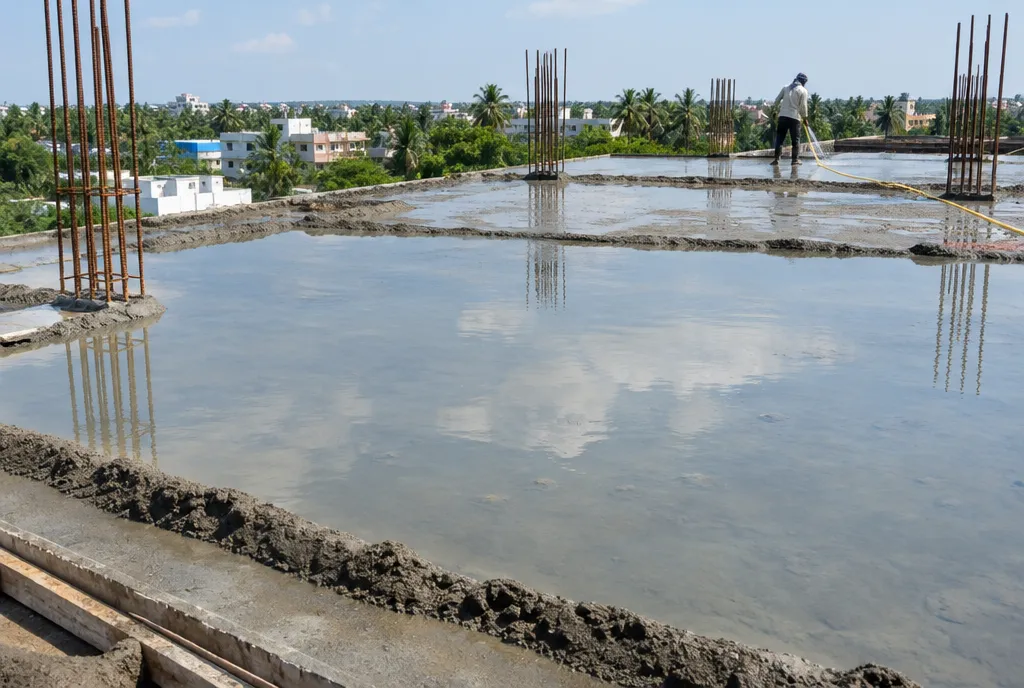
Curing means keeping freshly poured concrete moist and at a steady temperature so the cement can keep reacting with water. Done well, it gives higher strength, fewer cracks and a denser surface. It costs only water and labour, which is why it is the cheapest upgrade a building can get.
Why concrete needs water after it is poured
Concrete does not dry to gain strength. It hardens through a chemical reaction between cement and water, and that reaction continues only while enough moisture is present. If the surface dries out early, the reaction stalls near the top, leaving a weak, dusty, crack-prone skin.
Why Jaipur sites need extra care
Hot, dry, windy weather pulls water out of fresh concrete very quickly, which can cause fine surface cracks within hours. In peak summer, pour in the cooler part of the day where possible and start curing as soon as the surface can take it without being marked.
Curing methods that work on a house site
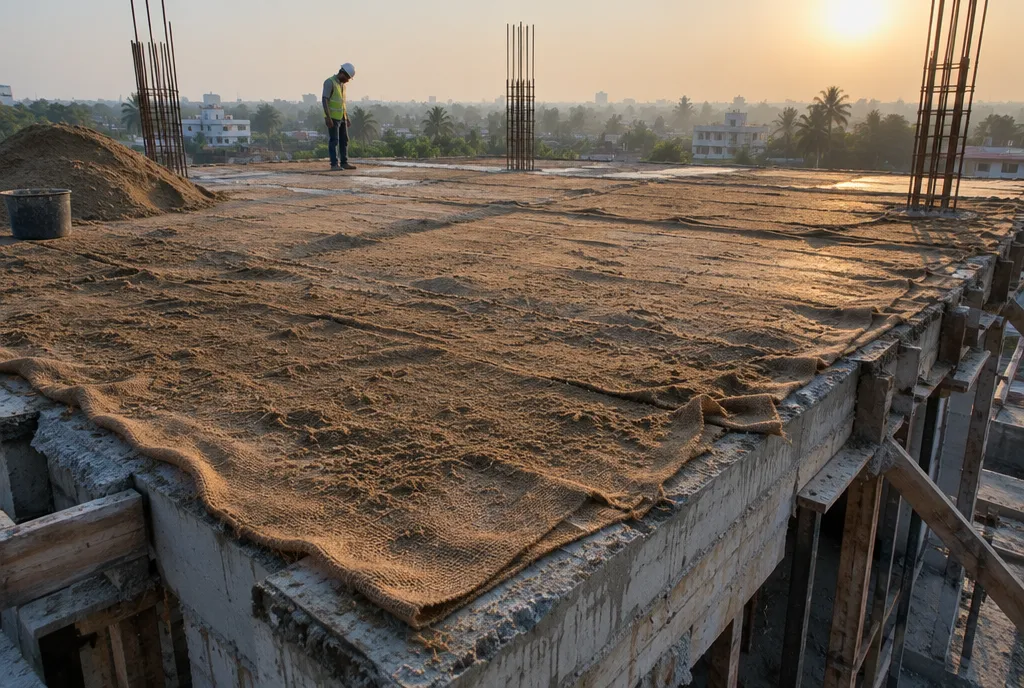
- Ponding: shallow water held on slabs by small bunds. Simple and very effective for flat roofs.
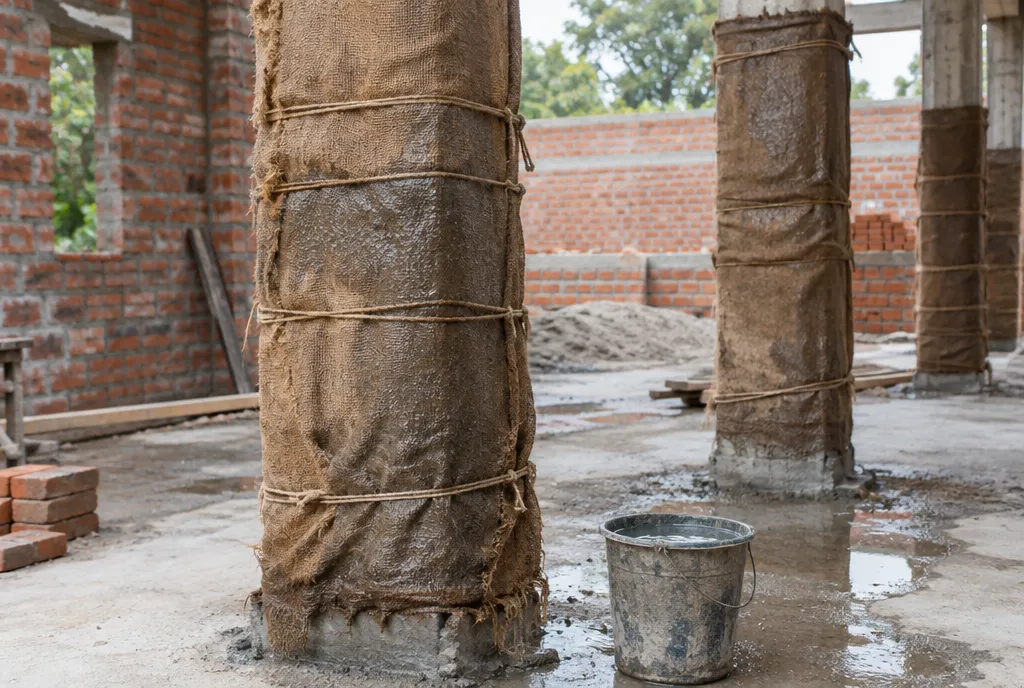
- Wet hessian or jute: wrapped around columns and laid over slabs, and re-wetted before it dries.
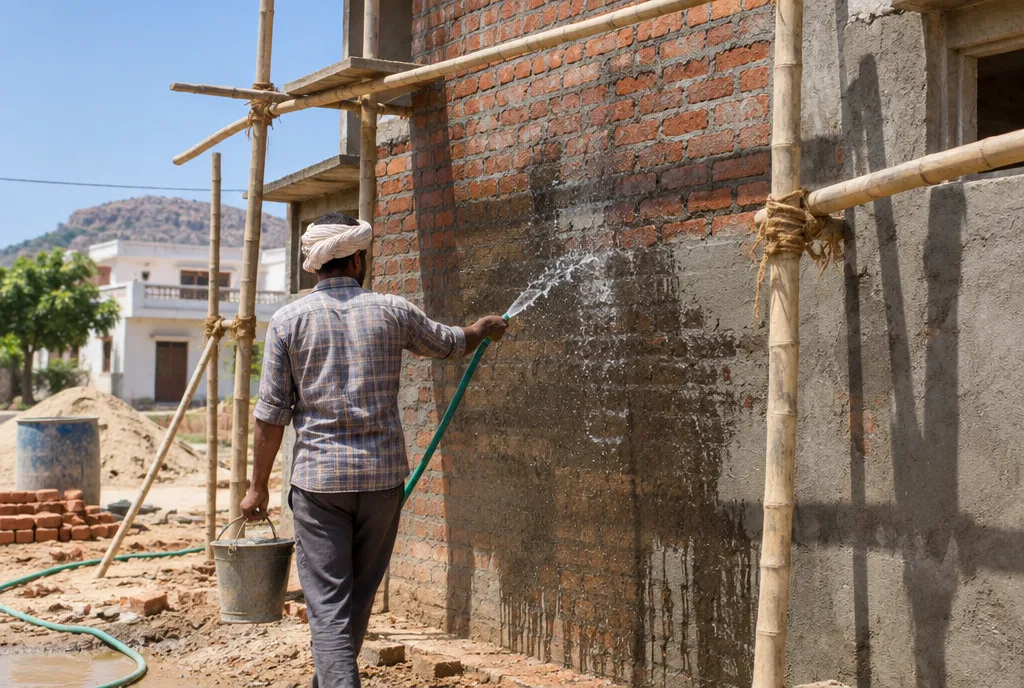
- Sprinkling: regular watering of walls, beams and plaster, so the surface never turns pale and dry.
- Curing compound: a liquid membrane sprayed on, useful where water supply is limited, as your engineer approves.
How long to cure
IS 456 commonly calls for keeping exposed surfaces continuously damp for at least 7 days with ordinary Portland cement. Longer periods, such as 10 days or more, are usual for blended cements like PPC and in hot, dry weather. Your engineer will set the exact duration.
Curing should also continue through the days when props and formwork are still in place. Do not remove them early to speed up the schedule.
Common mistakes to avoid
- Watering once in the morning and leaving the surface to dry for the rest of the day
- Stopping after two or three days because the slab looks hard
- Letting jute or hessian dry out between watering rounds
- Adding extra water to the mix to make pouring easier, which weakens the concrete itself
- Forgetting columns, beam sides and the underside of sunken slabs
What you can check as a homeowner
Visit the site in the afternoon, when evaporation is highest. A slab that is still wet or ponded at that hour is being cured properly. A pale, dry surface is a warning sign worth raising with the site engineer. You can read more answers in our FAQs.
How Reidius Infra can help
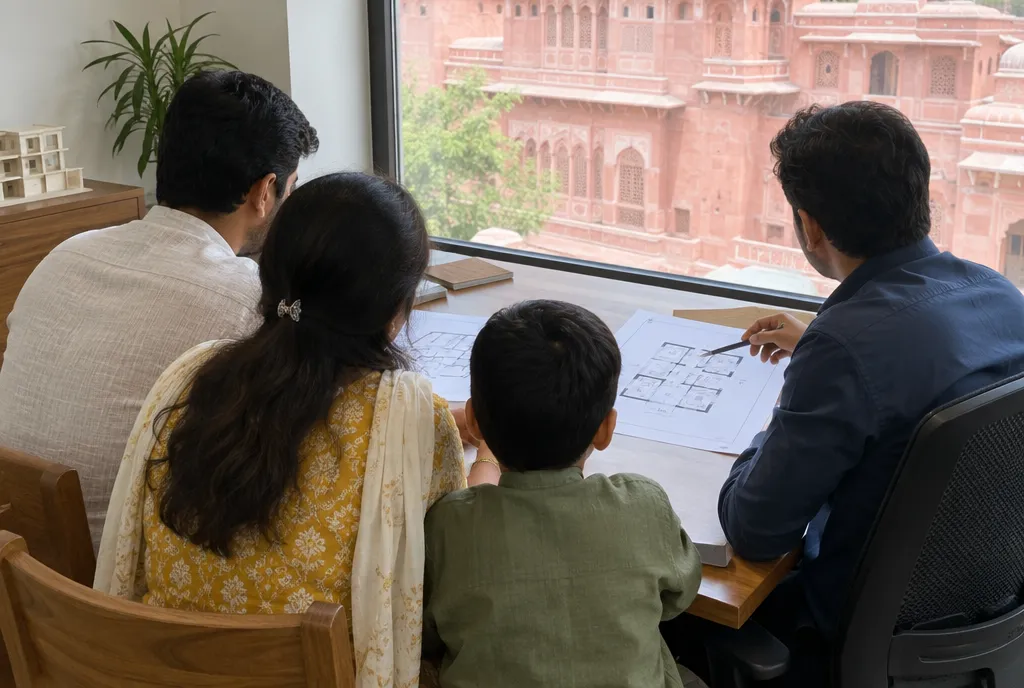
At Reidius Infra, architecture and construction sit in one team, so curing is planned into the schedule and not treated as an afterthought. Book a free consultation to talk through your build, whether you live in Jaipur or elsewhere.