

ARCHITECTURE
Designing a Jaipur Home for the Heat: Orientation, Shading and Cross-Ventilation
How the way a house faces, shades itself and lets air through decides how hot it feels in a Jaipur summer.
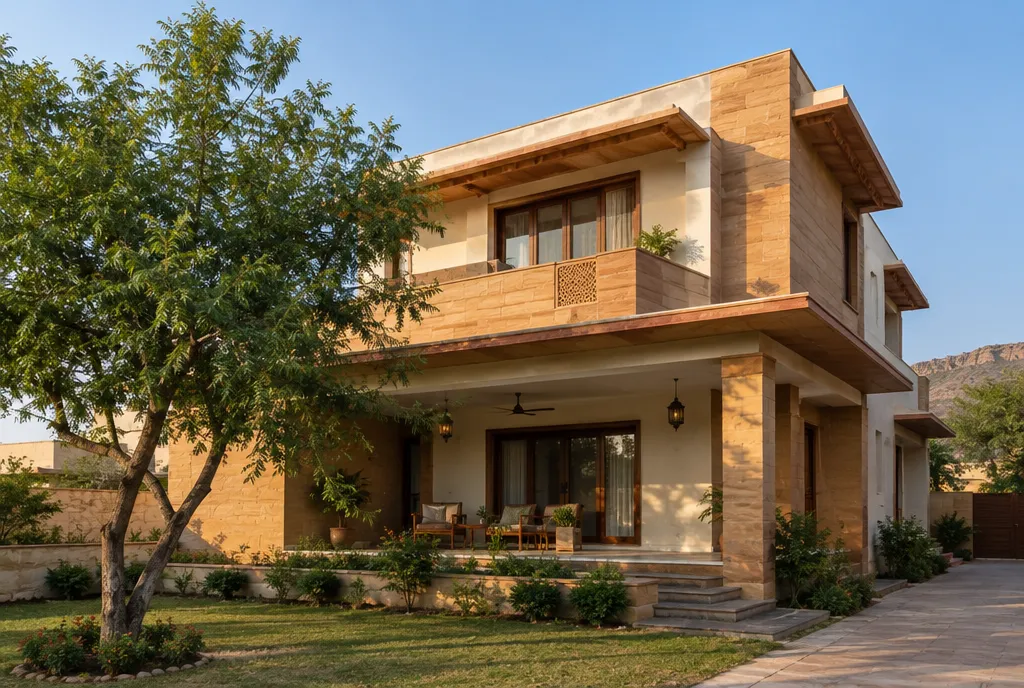
A home stays comfortable in Jaipur's summer when it blocks the sun before it reaches the walls and lets hot air leave. Three early decisions do most of the work: which way the house faces, how its openings are shaded, and whether air can pass straight through the rooms.
Start with orientation
Jaipur summers are long and the afternoon sun comes in low from the west. Where the plot allows, keep large windows away from the west and south-west faces, and put rooms you use less during the day on those sides.
- Stairs, store rooms, utility areas and bathrooms make good buffers on the west wall.
- Bedrooms and living areas usually do better on the east and north, which get softer light.
- On a plot that is fixed by its road side, you can still adjust window size and shading, so do not treat orientation as all or nothing.
Shade the walls and windows, not just the roof
Shade is cheaper than cooling. A window that never sees direct sun lets in light without the heat.
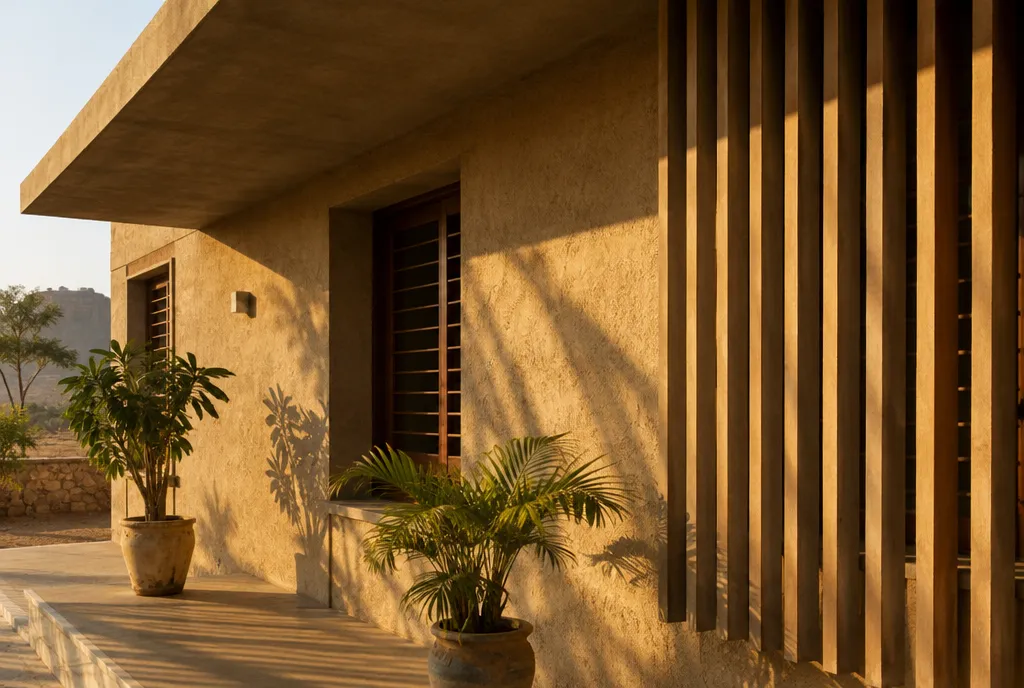
- Chhajjas and deep projections over windows, sized by an architect for the sun angle on that facade.
- Vertical fins or louvres on west-facing openings, where a simple overhang is not enough.
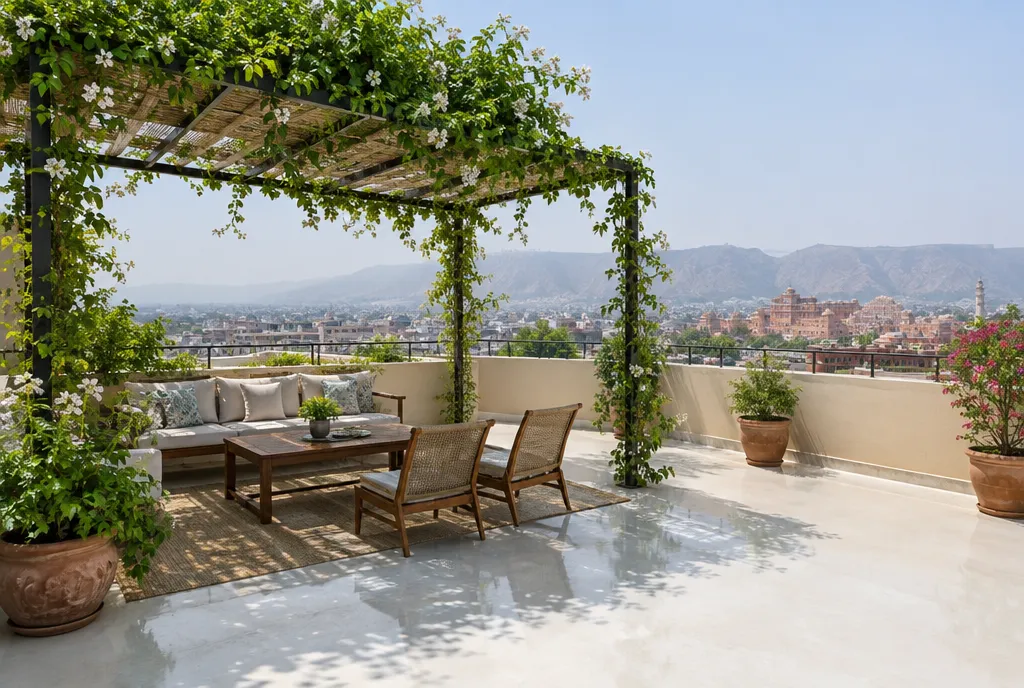
- A verandah or covered sit-out as a thermal buffer between the outside and the main rooms.
- Trees such as neem on the west side, planted far enough from the foundation.
Let the air move through
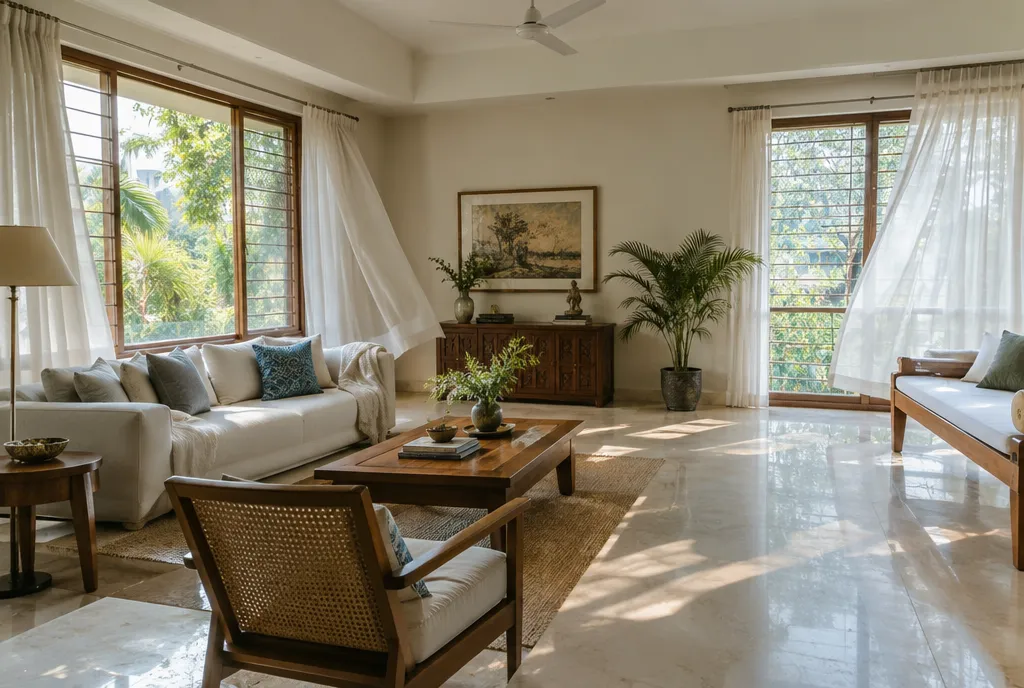
Cross-ventilation needs an inlet and an outlet on different walls, ideally opposite or adjacent. A room with windows on only one wall stays stuffy even if the windows are large.
- Place openings so air travels across the room, not just in and out of one corner.
- Keep internal doors and partitions from blocking the path; ventilators above doors help.
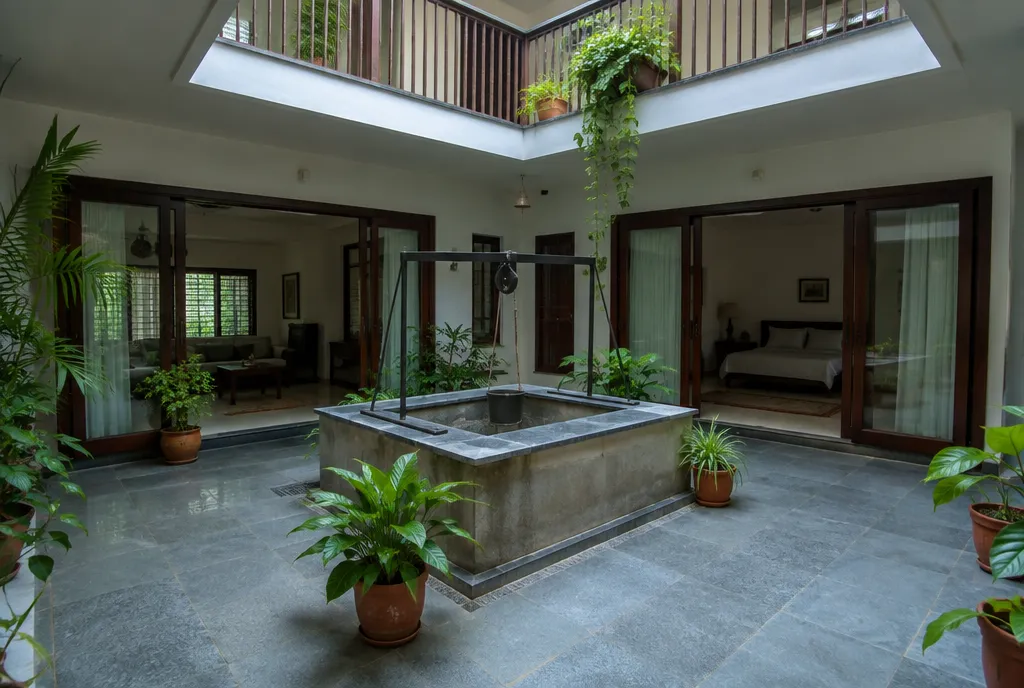
- Use a staircase void or a courtyard as a vertical outlet, so warm air rises and leaves.
- Make the outlets large enough; a small exhaust opening slows the whole flow.
Walls, roof and finishes
Thick or insulated walls slow heat entering the rooms. The roof takes the most sun, so a light-coloured finish, a shaded terrace and a proper roof insulation layer commonly make a visible difference. Ask your architect which wall and roof build-up suits your budget, rather than copying a specification from another city.
Do not forget the monsoon
The same openings that cool the house in summer must be protected in the rains. Deep overhangs help here too, and good drainage around the plot keeps the ground floor dry.
If you want to see how these ideas look when built, browse our projects.
How Reidius Infra can help
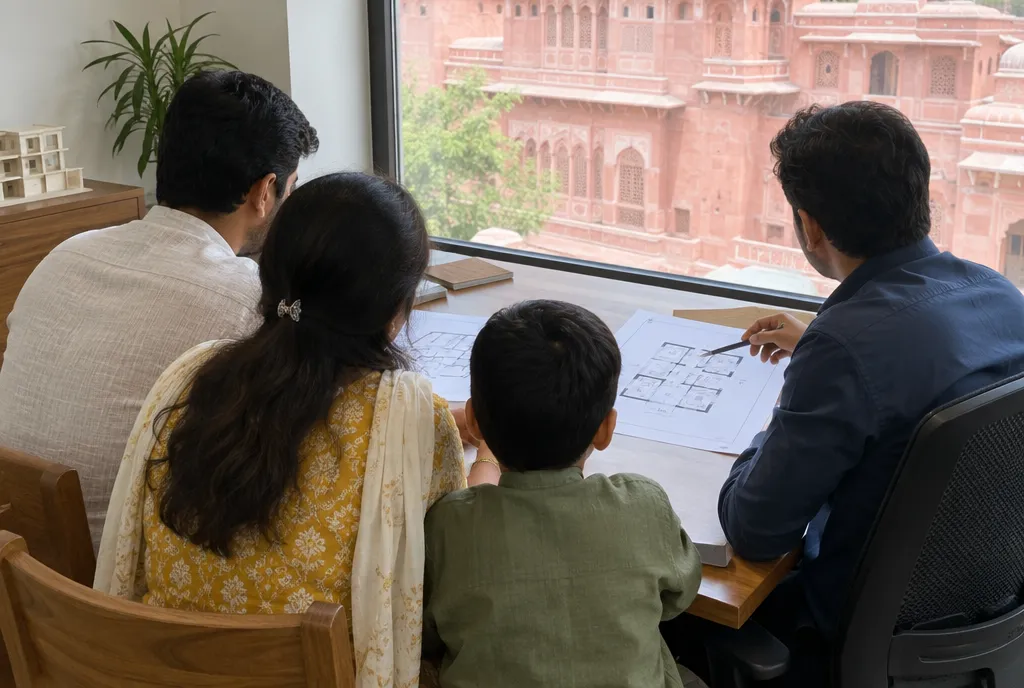
Reidius Infra brings architecture, construction and interiors under one team, so orientation, shading and ventilation are planned together and carried through on site. Whether you live in Jaipur or elsewhere, we can review your plot and your priorities during a free consultation.